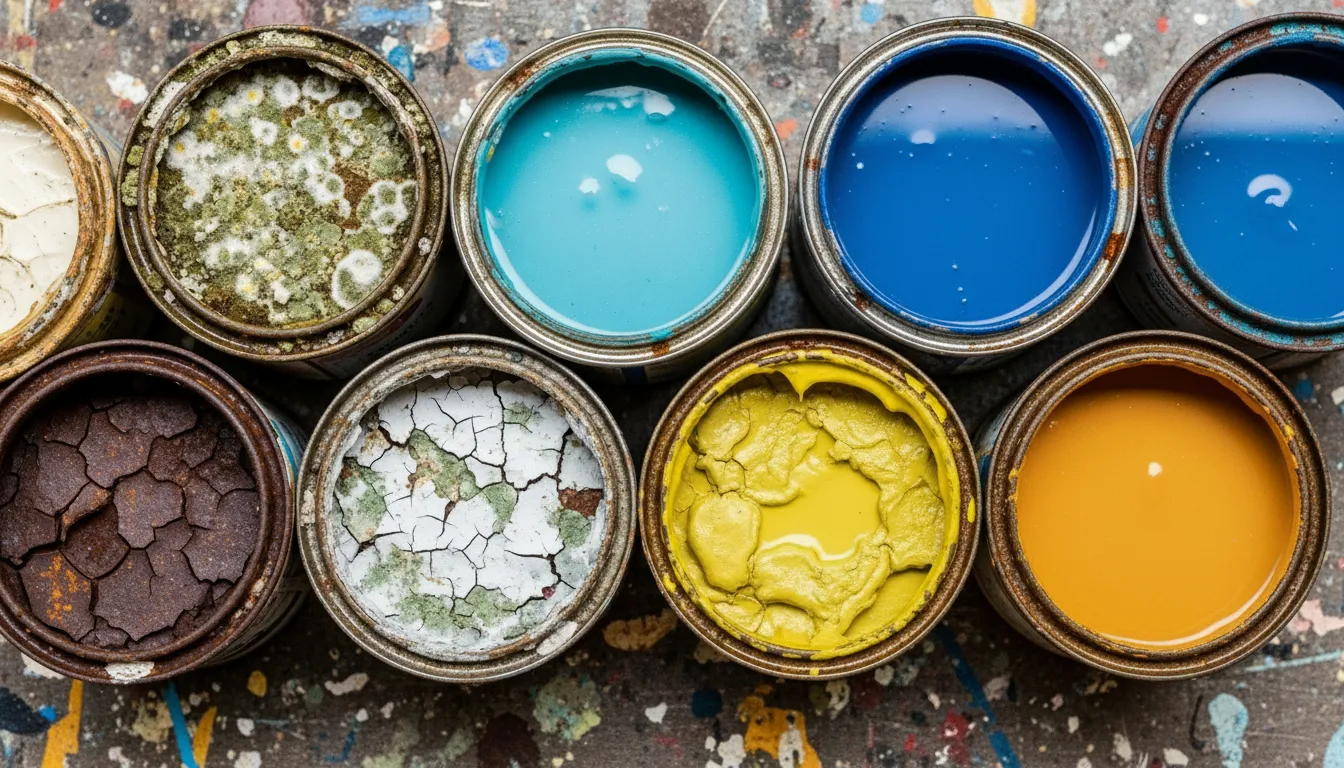
Dangers of Using Old Paint: Health and Safety Risks
The dangers of using old paint include lead poisoning in homes built before 1978, toxic fumes from deteriorating volatile organic compounds, and bacterial contamination that transfers to your walls. Latex paints last 2–5 years once opened, oil-based paints up to 15 years, but both become dangerous when they break down. When old paint looks, smells, or feels off, disposal is always the safer choice.
That leftover paint can in the garage looks like an easy fix. But old paint doesn’t always behave the way fresh paint does, and the problems it causes go beyond a bad paint job. This guide covers how to tell when paint has gone bad, what risks come with using it, and when disposal is the right call.
Key Takeaways
- Old paint can create health risks from bacterial growth and toxic fumes that can harm your family.
- Paint manufactured before 1978 may contain lead, which remains dangerous even in small amounts when chips or dust form.
- Oil based paints deteriorate over time despite longer shelf lives, becoming unsafe for interior use.
- Proper storage extends paint life, but unused paint eventually becomes hazardous waste.
- Excess paint seems economical but creates more problems than buying fresh paint.
What Happens If You Use Old Paint?
Using expired paint creates a cascade of problems that affect both your health and your project results. Understanding how paint affects coverage, adhesion, and air quality helps you make a smarter call before opening that old can. When paint sits in storage beyond its shelf life, chemical breakdown begins, leading to reduced performance and potential safety risks.
Health Risks from Expired Paint
The most serious concern with old paint involves potential health hazards from bacterial growth and chemical degradation. As paint ages, especially latex paints and water based paint, it becomes a breeding ground for harmful microorganisms. This bacterial growth produces that distinctive sour milk smell you’ll notice when opening contaminated paint cans.
Paint fumes from deteriorated compounds pose additional risks. When volatile organic compoundsbreak down over time, they can release increased levels of harmful chemicals, degrading your indoor air quality. These degraded compounds may cause allergic reactions, respiratory irritation, and headaches, posing particular risks for people with existing respiratory conditions or chemical sensitivities.
Application Problems with Bad Paint
Beyond health concerns, expired paint simply doesn’t work properly. Bad paint develops a cottage cheese consistency that makes smooth application impossible. You’ll struggle with poor adhesion, leading to peeling and flaking within months of application. The paint may not spread evenly, creating streaky, uneven coverage that looks unprofessional.
Color inconsistency becomes another major issue with old paint. Even if the paint color appears correct in the can, aged pigments may have broken down, resulting in unexpected color variations once applied. This makes touch ups nearly impossible and can leave you with patchy, mismatched walls that require complete repainting.
Can Old Paint Make You Sick?
Yes, bad paint can definitely make you sick through multiple pathways of exposure. The health risks range from respiratory complications caused by mold and bacteria to lead poisoning in homes with pre-1978 paint.
Bacterial Growth and Mold Formation
When paint develops bacterial growth, it creates serious indoor air quality problems. The funky smell emanating from contaminated paint cans signals the presence of harmful microorganisms that can trigger respiratory complications. This bacterial contamination doesn’t stay in the paint. It transfers to your walls and painted surfaces, creating ongoing exposure risks.
Mold formation in old paint presents particularly dangerous scenarios. Mold spores released during application can worsen existing asthma conditions or create new respiratory problems.
Once mold-contaminated paint is applied to surfaces, it can continue growing, spreading contamination throughout your living space. The sour milk odor often indicates advanced bacterial contamination that poses immediate health risks.
Water based paint and latex paints are especially susceptible to biological contamination due to their organic components and water content. Modern paints with reduced preservative content face even higher contamination risks when stored improperly.
Chemical Breakdown and Toxic Fumes
Chemical deterioration in old paint creates additional health hazards through increased volatile organic compounds release. As paint components break down, they may emit higher concentrations of toxic fumes than when fresh. This is particularly concerning with older formulations that contained lead or mercury, including many old finishes still present in American homes.
Paints manufactured before 1978 may contain lead, while those from before 1990 might have mercury contamination. These toxic metals become more dangerous as paint deteriorates, potentially creating dust or vapor exposure during application. Pregnant women face heightened risk from lead exposure, as it can affect fetal development even at low levels. Lead can also enter drinking water through household dust from deteriorating painted surfaces near plumbing.
Even newer oil based paints can develop increased toxicity as solvents and binders break down over time. Proper ventilation becomes critical when dealing with any old paint, but deteriorated paint may require professional assessment to determine safety.
Lead-Based Paint Risks in Older Homes
Lead-based paint was banned for residential use in 1978, but it remains in millions of American homes, typically hidden under layers of newer paint. If your home was built before 1978, it’s more likely to contain lead-based paint on walls, windows, and other painted surfaces.
Lead-based paint that’s in good condition usually isn’t an immediate danger. The risk rises sharply when paint chips, peels, or is disturbed during renovation. Lead paint chips and fine lead paint dust form when old surfaces are scraped, sanded, or subjected to friction. That dust is toxic when inhaled or ingested, and even small amounts of lead exposure can cause serious health problems.
How to Test for Lead Paint
Home test kits, available at any paint store, can determine whether your painted surfaces contain lead. The kits are inexpensive and produce results within minutes. If you get a positive result, avoid sanding or scraping the area. Use a wet cloth rather than a dry cloth or paper towel to clean up any dust, since dry wiping spreads particles instead of capturing them. Wear gloves when handling materials from suspect surfaces, and dispose of any rags and paper towels used during cleanup as hazardous materials.
For deteriorating lead-based paint, professional painters trained in lead-safe practices are the right call. Attempting removal without the proper equipment and training creates more risk than it eliminates.
Who Is Most at Risk
Children are especially vulnerable to lead exposure. Even small amounts can cause developmental delays, behavioral issues, and neurological problems. Pregnant women face heightened risk as well, since lead exposure can harm unborn babies at every stage of development. Lead can also contaminate drinking water through household dust that settles near plumbing or through deteriorating paint on surfaces that contact water supply lines.
Adults are not immune. Repeated lead exposure is linked to cardiovascular issues, kidney damage, and cognitive decline. In homes built before 1978, lead poisoning from old paint is a preventable risk with proper testing and professional remediation.
How Long Does Paint Last by Type?
Different paint formulations have varying lifespans, and understanding these differences helps you make informed decisions about paint storage and usage.
Oil Based Paints Longevity
Oil based paints typically offer the longest shelf life among common paint types. Unopened oil based paints can remain viable for up to 15 years when stored properly, while opened containers may last 5-10 years with proper sealing. This extended longevity comes from the chemical stability of solvent based paints and their natural resistance to bacterial growth. It also explains why old finishes in pre-1978 homes are often still oil-based, though those older formulations may contain lead.
One unique characteristic of oil paint involves skin formation, a thin protective layer that develops on the surface during storage. Unlike latex paints where skin formation indicates problems, this layer actually protects the remaining paint underneath from air exposure, potentially extending usability even further.
Latex Paints and Water Based Paint Duration
Latex paints generally last 8–10 years unopened and 2–5 years once opened, making them more perishable than oil based alternatives. Water based paint faces particular vulnerability to freezing temperatures, which can permanently separate the components and render the paint unusable.
The reduced preservative content in modern paints and latex formulas, while better for indoor air quality, creates shorter shelf life compared to older formulations. Bacterial growth is a naturally occurring risk in these water-based products, especially when stored in fluctuating temperature environments.
Specialty Paint Types
Chalk paint typically lasts only 1–3 years due to its unique formulation and lack of traditional preservatives. This specialty paint thickens quickly after opening and requires careful storage to maintain usability.
Milk paint presents the shortest lifespan, lasting just 1–7 days after mixing due to its organic protein content. Mixed paint of any type generally has reduced shelf life compared to single-component formulations.
Interior paint versus exterior paint doesn’t significantly affect shelf life during storage, though both require similar storage conditions despite their different performance characteristics once applied.
Factors Affecting How Long Paint Lasts
Storage conditions dramatically impact paint shelf life regardless of type. Air exposure accelerates chemical breakdown and water evaporation, shortening usable life significantly. Temperature fluctuations create expansion and contraction cycles that break down paint components.
Extreme heat can cause solvents to evaporate and paints to thicken beyond usability. Direct sunlight exposure degrades pigments and binders through UV radiation, even in sealed containers. These environmental factors can reduce expected shelf life by years, making proper storage critical for paint longevity.
Can You Use 10-Year-Old Paint?
Ten-year-old paint may still be usable depending on storage conditions and paint type, but thorough testing is essential before application.
Start with a smell test. Any sour, rancid, or moldy odor indicates bacterial contamination and immediate disposal. Open the container carefully and examine the contents visually for separation, discoloration, or mold growth.
Perform a cardboard patch test after thorough mixing. Use a paint stick to stir the contents for several minutes, checking for lumps or cottage cheese consistency that won’t blend smooth. If the paint mixes properly and passes the smell test, apply a small amount to cardboard and evaluate coverage, color accuracy, and drying characteristics.
Professional assessment may be warranted for valuable or large quantities of old paint. Paint stores often provide evaluation services, and experienced professionals can identify subtle deterioration signs that homeowners might miss.
Unopened latex paint has a better shot at usability than an opened container, but age still takes a toll. Oil based paints stored in climate-controlled environments often retain their quality well beyond 10 years. The cost of a new can of fresh paint often outweighs the risk of using questionable old paint, especially for important projects.
Can You Use 20-Year-Old Latex Paint?
Twenty-year-old latex paint is almost certainly unusable and potentially dangerous. This extreme age exceeds reasonable shelf life expectations for water based paint by significant margins.
After two decades, latex paints have likely experienced significant chemical breakdown regardless of storage conditions. The binders that hold pigments together deteriorate, causing permanent separation and application problems. Even if the paint appears mixable, its adhesion properties and durability are severely compromised.
Safety concerns increase dramatically with decades-old formulations. Older paints may contain hazardous materials no longer permitted in modern formulations, and chemical breakdown can create unexpected toxic compounds. The risk-reward ratio strongly favors disposal over attempted use.
How to Identify Bad Paint
Sensory Indicators of Expired Paint
Trust your nose. Any funky smell or sour odors indicate bacterial contamination requiring immediate disposal. The characteristic sour milk scent signals advanced bacterial growth that poses health risks. Rotten egg odors may indicate sulfur compound formation from chemical breakdown.
Visual inspection reveals separation, discoloration, or surface mold growth. Fresh paint maintains uniform consistency and color, while deteriorated paint shows obvious visual changes. Texture abnormalities like lumpy consistency or thick skin formation signal chemical breakdown.
Oil-based paint that has broken down chemically can also cause an upset stomach if accidentally ingested, which is why wearing gloves and keeping paint away from food preparation areas matters during any paint project.
Physical Deterioration Symptoms
Jelly-like consistency that doesn’t improve with stirring indicates permanent chemical changes making the paint unusable. Hard skin formation and dry paint that won’t re-incorporate into the liquid signals advanced deterioration. Paint that feels gritty or contains visible particles when mixed has likely contaminated or broken down beyond recovery.
Rust contamination from paint cans introduces metal particles that can stain surfaces and indicate poor storage conditions. Any visible mold growth requires immediate disposal as contaminated paint poses ongoing health risks even after application.
How to Store, Handle, and Dispose of Old Paint Safely
Optimal Storage Conditions
Store paint in climate-controlled environments maintaining temperatures between 60–80°F year-round. Avoid locations subject to freezing temperatures, which can permanently damage latex paints and water based paint formulations. Basements, interior closets, and conditioned storage areas provide ideal environments. Paint stored properly in these conditions has the best chance of remaining usable when you need it.
Humidity management prevents condensation and moisture intrusion that accelerate bacterial growth and chemical breakdown. Excessive moisture creates perfect conditions for mold formation and paint contamination. Direct sunlight exposure should be avoided even for sealed containers, as UV radiation degrades paint components over time.
Container Sealing and Organization
Create an airtight seal using a rubber mallet to ensure proper lid closure without denting. Clean paint residue from can rims before sealing to prevent air leaks. Adding a plastic wrap gasket between the lid and can rim provides additional protection against air exposure.
For partially used paint cans, consider transferring leftover paint to smaller containers to minimize air exposure. Label each container with the paint color, purchase date, and location used so you can track what you have for future paint projects. This simple step can save you from having to re do work with paint that’s past its prime.
Safe Handling Tips
Wear gloves when handling old paint, especially when working with cans that predate 1978 or show signs of contamination. If you’re testing painted surfaces for lead, use a wet cloth rather than a dry cloth or paper towel to clean up any residue. Dry wiping spreads fine particles into the air; a damp cloth traps them.
Dispose of rags and paper towels used with oil-based paint as hazardous materials, not in regular household trash. Work in a well-ventilated area and keep old paint away from food and food preparation surfaces.
How to Dispose of Old Paint
Oil based paints are considered hazardous waste in most jurisdictions due to their solvent content and require special disposal procedures. Improper disposal allows heavy metals and toxic chemicals to leach into soil, potentially contaminating groundwater and drinking water supplies. Local ordinances typically prohibit disposal in regular household garbage, and violations can result in fines.
Many communities offer municipal collection days specifically for hazardous household materials including old paint. These programs provide safe, legal disposal options while ensuring proper environmental protection. Paint stores may also accept returns for proper disposal, particularly for hazardous formulations.
Latex paints and water based paint can often be solidified using absorbent materials like cat litter, paint hardener, or even paper towels for small amounts before regular garbage disposal. This process makes liquid paint safe for landfill disposal while meeting most local requirements.
Professional hazardous waste facilities accept all paint types and ensure proper environmental handling. These facilities have specialized equipment and procedures for paint processing, recycling, or safe destruction. Contact local environmental agencies for facility locations and accepted materials.
When to Call Professional Painters
Professional painters bring expertise in paint evaluation, safe handling, and quality material selection that makes a real difference when old paint is involved. They can quickly identify problems homeowners might miss, from lead contamination in pre-1978 homes to mold-contaminated paint that looks fine in the can.
For homes built before 1978, hiring professional painters trained in lead-safe practices is especially important. The equipment and procedures required for safe lead paint handling aren’t practical for most DIY projects, and the health risks of improper removal aren’t worth cutting corners.
Conclusion
The dangers of using old paint extend far beyond poor appearance. They include serious health risks and potential safety hazards that make fresh paint the smart choice. While proper storage can extend paint shelf life significantly, age-related deterioration eventually makes all paint unsuitable for use.
When in doubt, invest in new paint rather than risking contamination, poor results, or health problems from expired materials. The cost of fresh paint represents a small fraction of the expense required to fix problems caused by bad paint application.
For professional results with guaranteed quality materials, OnDemand Painters provides expert paint selection, preparation, and application services. Our experienced teams use only fresh, high-quality paints and proper techniques to ensure lasting, beautiful results that protect your investment and your family’s health.
FAQs
How long does chalk paint last compared to other paint types?
Chalk paint has the shortest shelf life of common paint types, lasting only 1-3 years due to its unique formulation and lack of traditional preservatives, making it much more perishable than standard paints.
Are oil based paints safer to use when old compared to other paint types?
Oil based paints last longer than water-based alternatives but still become dangerous when old, developing increased toxicity as solvents break down and potentially containing lead or mercury in older formulations.
Should I keep excess paint from my painting project for future use?
Excess paint can be stored for touch-ups if properly sealed and stored, but it deteriorates over time and may develop health hazards or application problems that make fresh paint a better choice.
What are the best practices for storing interior paint to extend its shelf life?
Storing interior paint requires airtight sealing, climate-controlled temperatures, protection from freezing, and transferring to smaller containers when partially used to minimize air exposure and prevent contamination.
Are lead paint chips dangerous?
Lead paint chips and the dust they produce are toxic when inhaled or ingested. Even small amounts of lead exposure can cause developmental delays in children and cardiovascular problems in adults, making prompt cleanup and professional assessment essential.
How do I know if my home has lead-based paint?
Homes built before 1978 are most likely to contain lead-based paint. Home test kits, available at any paint store, can confirm whether your painted surfaces contain lead within minutes.

Chris Heerdegen
Chris Heerdegen is the founder and owner of OnDemand Painters, a painting and finishing company serving six metro markets across the Midwest and Florida. With over 20 years in the industry since 2001, Chris built OnDemand around a simple idea: answer the phone, show up when you say you will, and do the kind of work that earns a review.
All Posts