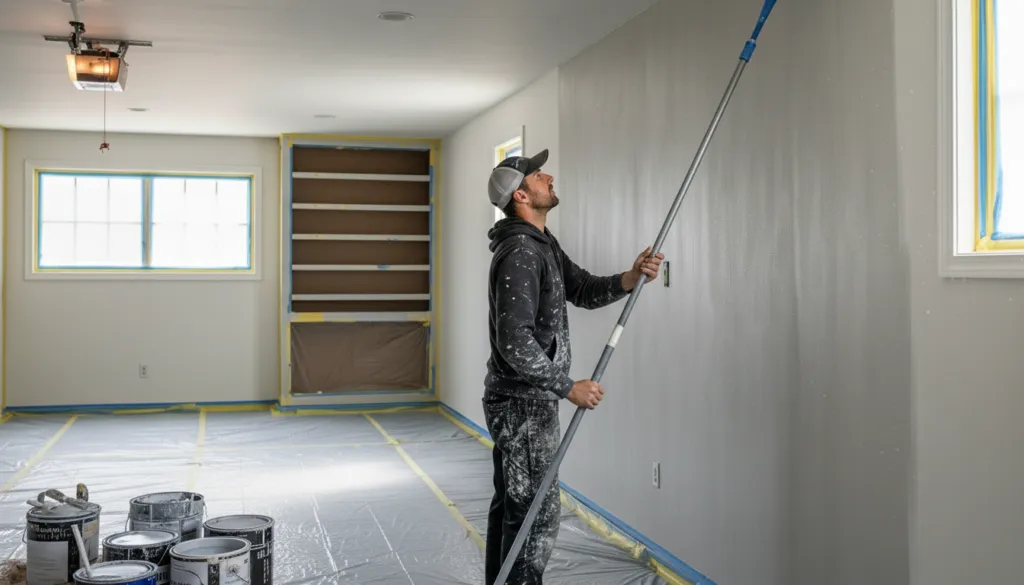
How to Paint Garage Walls: Complete Guide for Lasting Results
To paint garage walls, clean surfaces thoroughly, apply primer to bare areas, then use interior latex paint in semi-gloss finish. This combination provides durability, easy cleaning, and long-lasting protection against garage conditions.
Your garage walls take a beating from temperature changes, moisture, and daily wear. Painting garage walls isn’t just about looks. It’s about protection. A proper paint job creates a barrier against dust, stains, and moisture while making your garage interior easier to clean and maintain.
Most homeowners overlook their garage walls, leaving bare drywall or concrete exposed to harsh conditions. This leads to dust buildup that’s impossible to remove, stains from oil and grease, moisture damage, and a dingy appearance that affects your home’s value. A fresh coat of quality paint solves these problems while brightening your space.
Key Takeaways
• The best paint for garage walls is interior latex paint in semi-gloss finish for durability and easy cleaning.
• Light colors like light gray and light blue brighten spaces and hide dirt better than dark colors.
• High quality paint with low volatile organic compounds emits fewer harmful fumes in enclosed garage spaces.
• Proper preparation and priming unfinished drywall prevents mildew growth and ensures good finish coat adhesion.
• Acrylic paint with subtle sheen offers superior chemical resistance and reflects light while resisting stains.
• Semi-gloss and satin finishes resist moisture, wipe clean without damage, and outlast flat paint in garage conditions.
Best Paint for Garage Walls: Choosing Your Options
Interior Paint vs Exterior Paint
Many people wonder whether to use interior paint or exterior paint for garage walls. Here’s the truth: interior latex paint is your best choice for garage walls. While garages face tough conditions, they’re still indoor spaces that need paint formulated for interior use.
Exterior paint contains additives that can release harmful fumes in enclosed spaces. These chemicals help paint withstand outdoor weather but create health risks indoors. Most paint stores don’t stock exterior paint for interior use, and that’s by design. Stick with interior paint for safety and better performance. Any paint store will carry several interior latex options in the finishes and sheens covered below.
Garage Wall Paint Types
Water-based latex paint leads the pack for garage wall paint applications. It dries quickly, has a low odor, and cleans up with water. Modern latex formulations resist cracking from temperature changes, making them a reliable choice for garage conditions.
Brands like Sherwin Williams and Benjamin Moore offer latex lines specifically suited for high-humidity and high-traffic spaces. When it’s time to choose the actual paint, look for interior latex in eggshell, satin, or semi-gloss. These options give you durability without the drawbacks of oil-based products.
Acrylic paint offers superior durability compared to standard latex. It provides excellent adhesion on concrete walls and masonry surfaces. This paint type resists moisture and chemicals, making it ideal for workshop areas where automotive fluids might splash.
Oil based paint offers superior durability but comes with drawbacks. It takes longer to dry, requires paint thinner for cleanup, and produces strong fumes. Reserve oil based primer for specific situations where extra adhesion is needed. Paint thinner is necessary for cleaning brushes and tools when using oil based paint, while latex paint cleans up easily with water and dish soap.
Quality garage paint typically covers 350–400 square feet per gallon on smooth surfaces. For textured concrete walls, expect coverage rates of 250–300 square feet per gallon. For a standard two-car garage, plan on 5–6 gallons for two coats of paint on walls and ceiling. Apply paint when humidity levels stay below 70% for best drying. Temperature should remain between 50–85°F during application and for 24 hours afterward.
Selecting the Best Paint Finish
Semi Gloss: The Top Choice
Semi gloss finish is the goldilocks of garage paint: not too shiny, not too dull. This sheen reflects light to brighten your space while resisting stains and moisture. You can wipe clean semi gloss surfaces without damaging the finish.
Satin provides a subtle shine that hides minor wall imperfections. It’s easier to clean than flat paint but not quite as durable as semi gloss. Flat or matte paint may look smooth, but it’s a nightmare for garage walls. It absorbs stains like a sponge and can’t handle cleaning without damage.
Wall paint near parking areas needs durability similar to garage floor coatings. Choose paint that resists heat transfer from vehicles and won’t soften when exposed to warm air circulation from hot engines.
Essential Tools for Your Paint Job
Proper Tools You’ll Need
A quality paint roller covers large areas efficiently. Choose a 9-inch paint roller with extension pole for walls and ceiling work. Use 3/8-inch nap rollers for smooth surfaces like drywall, and 1/2-inch nap for textured walls. If you’re unsure which nap to grab, the staff at your local paint store can point you to the right option for your surface type.
Angled brushes work best for cutting in around doors, windows, and trim. A 2.5-inch angled brush handles most garage painting tasks. For different areas, use a 2–3 inch angled brush for trim and corners, and a 3–4 inch brush for larger flat surfaces.
For garages with high ceilings, use a sturdy ladder to reach upper areas safely. An extension pole helps you paint high walls without constantly moving the ladder.
Always stir your paint thoroughly with a paint stick before and during use to ensure even color distribution, especially important when using leftover paint from previous projects.
Cleaning and Prep Supplies
Start every painting project with thorough dust removal using a shop vac. A shop vac pulls debris from wall surfaces and corners that regular vacuums miss. Mix water and dish soap for general wall cleaning. For large stains or grease buildup, use a mild detergent solution. For grease-heavy walls, TSP (Trisodium Phosphate) cuts through buildup that regular soap won’t touch. Pick it up at any hardware store and follow dilution instructions on the label.
You’ll also need all-purpose joint compound for filling holes, sandpaper for smoothing repairs, drop cloths to protect your garage floor, painter’s tape, and safety gear including gloves and respirator mask if using oil based products.
Preparing Garage Walls for Painting
Cleaning Your Garage Walls
Use your shop vac to remove loose dust and debris from all wall surfaces. Pay special attention to corners and areas around the garage door where dirt accumulates. After vacuuming, wipe down surfaces with a wet rag to catch any remaining dust before moving to a full wash.
Wash walls with water and dish soap solution. Work from top to bottom, using a sponge or soft cloth. For stubborn dirt or large stains, let the solution sit before scrubbing gently. Check for any peeling paint as you go and scrape it off before washing. You don’t want loose material getting trapped under your new coat.
Allow walls to dry completely before proceeding. This usually takes 24 hours in normal conditions but may take longer in humid weather. After washing walls, wait at least 24 hours for surfaces to dry completely before you begin painting.
Surface Preparation and Repair
Concrete walls often need etching for proper paint adhesion. Mix muriatic acid solution according to manufacturer directions (typically 1:10 ratio with water). Apply with a plastic sprayer, let foam for 10–15 minutes, then scrub with a stiff brush. Rinse thoroughly and allow 48 hours’ drying time.
Test concrete walls for moisture before painting. Tape plastic sheets to wall surfaces and check for condensation after 24 hours. Moisture presence indicates need for vapor barrier primer or additional drying time.
Always use drywall primer on bare drywall surfaces. The porous nature of unpainted drywall will absorb paint unevenly without proper priming. For most garage walls, use a polyvinyl acetate (PVA) primer designed for unfinished drywall. If you’re painting over oil based paint or need to cover dark colors, an oil based primer or bonding primer provides better adhesion. For bare wood surfaces like exposed studs or shelving, oil based primer seals the wood properly.
Apply all-purpose joint compound to any holes, cracks, or dents in your garage drywall. Use a putty knife to smooth the surface flush with the surrounding wall. Let repairs dry completely before sanding smooth.
 Tips for Painting Garage Walls
Temperature and Ventilation Requirements
Paint dries best at temperatures between 50–80°F. When it’s too hot, paint dries too quickly and creates an uneven finish. When it’s too cold, paint won’t cure properly, leading to cracking and peeling down the road.
Keep humidity below 70% during application. Proper ventilation is key, especially when using oil based primer or paint. Open your garage door fully, open any windows, and use fans to circulate fresh air. This removes harmful volatile organic compounds (VOCs) and speeds drying time. For attached garages, run ventilation for several hours to prevent fumes from entering your house.
How to Paint Garage Walls Step-by-Step
Setting Up and Beginning Painting
Cover your garage floor with drop cloths or plastic sheeting. Move cars and stuff stored near the walls out of the way before you start. Paint drips happen even to experienced painters, and cleanup is much easier when you’ve protected things in advance. Arrange your painting supplies for easy access. Keep your paint roller, brushes, and more paint nearby but out of the way of foot traffic.
Before you begin painting with your roller, use a brush to “cut in” around edges. Paint a 2–3 inch border around doors, windows, ceiling lines, and corners. Load your brush moderately – too much paint creates drips, too little requires multiple passes. Use painter’s tape to protect fixtures, door frames, and areas where walls meet the ceiling or floor. Cover or remove garage door handles and light switches.
Applying Coats of Paint
Work in 4-foot sections when painting garage walls. Apply paint in a “W” pattern, then fill in with parallel strokes. This technique ensures even coverage without roller marks. Never let the edge of painted areas dry completely before connecting with the next section.
Don’t expect perfect coverage from your first coat, especially on bare drywall. Once you begin applying the actual paint to the main wall surfaces, focus on even application rather than trying to hide everything with one heavy coat. Allow each coat to dry completely before applying the next. Latex paint typically dries in 2–4 hours but check manufacturer recommendations. Temperature and humidity affect drying time significantly.
Most garage walls need two coats of paint for best results. Your second coat should provide full coverage and even color. Rushing the second coat before the actual paint from the first application has fully cured leads to adhesion problems and uneven finish. Some dark colors or high-contrast situations may require a third coat, but two coats typically suffice for most painting projects. For the final coat, use horizontal strokes to create a professional-looking finish that hides any roller marks.
Garage Paint for Different Surfaces
Drywall and Concrete Treatment
Fresh garage drywall always needs drywall primer before paint. Without primer, your paint will absorb unevenly, creating a blotchy appearance that shows through coats of paint. If existing paint is in good condition, you can often paint directly over it, though glossy surfaces may need light sanding.
Concrete walls require thorough cleaning to remove dust, oil, or white chalky deposits. Use a stiff brush and cleaning solution, then allow complete drying. Choose paint specifically formulated for masonry surfaces with better alkalinity resistance and adhesion properties for concrete.
Any metal surfaces in your garage need proper preparation. Sand away rust and apply appropriate metal primer before painting. Use paint compatible with your primer choice. Paint your ceiling the same color as walls or slightly lighter. White ceilings reflect the most light but show dust and stains easily. If you have garage cabinets, paint them to match your walls or choose a color that complements the wall paint for a cohesive look.
Specialized Applications and Best Paint Performance
If you’re painting as part of a broader garage renovation, the areas below deserve extra attention.
Workshop and Automotive Areas
Areas used for oil changes and mechanical work need extra protection. Apply an additional fresh coat of paint in these zones, or consider epoxy paint for maximum chemical resistance. Focus on walls within 3 feet of typical work areas where automotive fluids like brake fluid, antifreeze, and motor oil might splash.
Garages storing seasonal items experience extreme temperature swings. Paint must flex with expansion and contraction cycles. Latex paint handles these conditions better than rigid oil-based alternatives. Proper paint creates a moisture barrier that prevents wall damage and mold growth behind stored items.
Garage Floor Coordination
While focusing on walls, don’t forget that your garage floor paint choice affects the overall look. Epoxy paint works excellent for garage floors, creating a durable surface that complements freshly painted walls. This coordination creates a cohesive appearance throughout your garage interior.
Quality garage paint should withstand scrub testing without significant color loss. Look for paints rated for high-traffic areas that pass ASTM D2486 scrub resistance testing. Properly applied garage wall paint should last 7–10 years before requiring recoating, depending on surface preparation quality and garage usage intensity.
Safety and Cost Considerations
Health and Safety Measures
Choose low-VOC paint formulations when pets access garage areas. Allow extra ventilation time before allowing pets back into painted spaces. If children play in garage areas, select paint with zero-VOC formulation. These paints cost more but eliminate health concerns in enclosed spaces.
Ensure proper ventilation during application and drying. Open garage door and windows, use fans to circulate air. This is especially important in attached garages that connect to living spaces.
Budget and Professional Options
Budget $0.50–$1.50 per square foot for DIY garage painting, including paint, primer, and supplies. Professional installation ranges $2.00–$4.00 per square foot depending on surface conditions and local labor rates.
Plan 8–12 hours total for an average two-car garage: surface preparation takes 3–4 hours, primer application requires 2–3 hours, two paint coats need 3–5 hours, and cleanup plus touch-up takes 1–2 hours.
DIY saves 60–70% on labor costs but requires significant time investment. Professional painters like OnDemand Painters provide warranty protection and faster completion – valuable for busy homeowners or complex surface conditions.
Maintenance and Common Mistakes
Keep leftover paint for future touch-ups, stored in a cool, dry place with tight-fitting lids. Bring a chip of the dried paint to your local paint store to get a color match if you run out. Address spills and stains quickly. Most garage wall stains come from automotive fluids, tools, and storage items that clean easier when fresh.
Poor cleaning leads to paint adhesion problems. Take time for good cleaning. It’s the foundation of any successful painting project. Many DIY painters skip primer to save time and money, but this shortcut often results in poor coverage and premature paint failure.
Applying paint too thickly creates drips, sags, and poor drying. Multiple thin coats always outperform one thick application. Patience pays off in painting. Rushing to apply additional coats before proper drying leads to poor adhesion and finish problems.
Conclusion
Learning how to paint garage walls properly transforms one of your home’s most functional spaces. The key to success lies in choosing the right interior latex paint, thorough surface preparation, and patient application of multiple coats. Semi gloss finish provides the durability and cleanability that garage walls need while brightening your garage interior.
Remember that painting garage walls requires patience and proper technique. Take time for good cleaning, use drywall primer on bare surfaces, and allow each coat to dry completely. Whether you’re refreshing a single wall, completing a full garage renovation, or working with professional painters like OnDemand Painters, the investment in quality garage wall paint pays long-term dividends in both appearance and functionality. Your garage deserves the same attention as any other room in your house.
FAQs
What paint colors work best for garage walls?
Light colors like white, beige, and off-white reflect more light and make garages appear larger and brighter than darker alternatives.
Is light gray a good choice for garage wall paint?
Light gray is an excellent garage wall color because it hides dust and dirt while still reflecting enough light to keep the space bright and welcoming.
Should I consider light blue for my garage walls?
Light blue creates a calming atmosphere in your garage while maintaining the brightness benefits of light colors and effectively concealing minor scuff marks.
What are the best paint brands for garage walls?
Sherwin Williams and Benjamin Moore are two consistently recommended brands for garage wall paint. Sherwin Williams offers lines like Duration and Emerald, both of which perform well in high-humidity environments. Benjamin Moore’s Regal Select and ben Interior lines are solid options for drywall surfaces. Either brand is available at most paint stores in whatever sheen you choose.
What is a two part coating system and when should I use it?
A two part coating system like epoxy consists of resin and hardener that chemically bond for maximum durability, ideal for high-traffic garage areas.
Are bold colors suitable for garage walls?
Bold colors can work as accent walls but aren’t recommended for entire garages since they show dust, scuff marks, and imperfections more readily than lighter shades.
How do scuff marks affect different paint colors?
Scuff marks show most prominently on dark and bold colors, while light colors with semi-gloss or satin finishes help camouflage minor wall damage and wear.
What happens if you don’t use primer before painting?
Without primer, paint won’t stick properly to bare drywall or concrete, leading to peeling, blotchy coverage, and early paint failure. Primer also helps cover stains and provides a uniform surface for your coats of paint.
Should I paint my garage ceiling and walls the same color?
Painting your ceiling and walls the same color creates a clean, cohesive look. Light colors like white or light gray work well for both surfaces and help reflect light throughout your garage interior.
How do I maintain my newly painted garage walls?
Clean spills immediately before they set. Use a damp cloth with mild detergent for routine cleaning. Keep some leftover paint for touching up chips and scuffs. With proper care and high quality paint, your garage walls should last 7-10 years before repainting.

Chris Heerdegen
Chris Heerdegen is the founder and owner of OnDemand Painters, a painting and finishing company serving six metro markets across the Midwest and Florida. With over 20 years in the industry since 2001, Chris built OnDemand around a simple idea: answer the phone, show up when you say you will, and do the kind of work that earns a review.
All Posts